
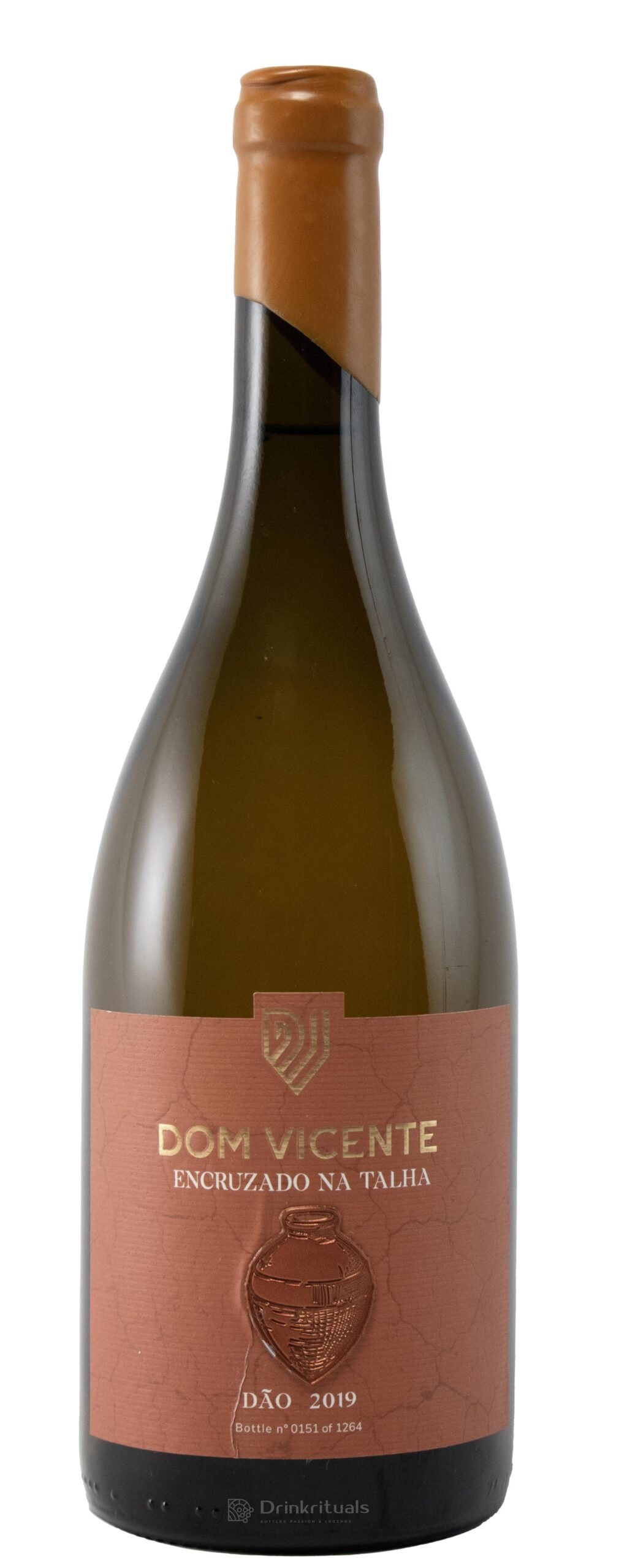
Dom Vicente Encruzado Na Talha 2019

Dom Vicente Encruzado Na Talha is a Portuguese white wine made from the grape variety Encruzado, the most important white grape in Portugal. The wine comes from the Dão wine region with an alcohol content of 14%. Looking for inspiration in antiquity, this beautiful wine was naturally fermented in very old vases, where it matured for 3 months. Due to the fermentation process, we have a white to drink immediately, but also with bottle maturation options. In short, a delicious wine with the right profile to make it a great table companion.

Flavor Character Dom Vicente Encruzado Na Talha

Dom Vicente Encruzado Na Talha has a beautiful citrus yellow color, wine with light fruit aromas, associated with very mineral notes typical of the Encruzado. In the mouth it highlights the minerality and acidity. It only had natural stabilization and light filtration before bottling. The wine is a good combination with dishes such as seafood, all fish dishes or even lighter meat dishes. To be served at 8 to 10 degrees Celsius.


25,95

Price is with VAT percentage
On stock

16 in stock

⚠️ Attention! Product photos are for illustration purposes only. The actual label may vary depending on the vintage. The vintage is stated in the title.

⏳ Orders placed before 16:00 are usually delivered within 3-5 business days in the EU (excluding public holidays).

Description

Wine region

Dão is located in the southern part of Beira Alta and south of the Douro River. Two important rivers flow in the area: the Dão and the Mondego. The area is located around the cities of Viseu, Guarda and Coimbra. Viticulture is mainly practiced on terraces against the slopes. Vines can be found from 200-600 meters above sea level. The wine growing authorities have divided the Dão area into seven sub-regions: Alva, Besteiros, Castendo, Serra da Estrela, Terras de Azurara and Terras de Senhorim. The Dão has many small companies with an average area of ​​1.2 hectares. In the past, the region produced a lot of bulk wine that was filled in cardboard or bottles with crown caps. After joining the European Union, much has changed for the better. The old-fashioned wines have made way for modern ones, which are more easy to drink and less harsh.